
Court records in Alamance County, North Carolina, are maintained by the clerk of superior court and can be accessed through online tools, official court portals, and the clerk's office. AlamanceCourt.us can help you find publicly available court record information for Alamance County. You can also search records through the North Carolina courts website, visit the clerk's office in person, or contact state agencies for related documents such as criminal history checks and vital records.
Alamance County Court System Overview
Alamance County is part of Judicial District 15A in North Carolina's General Court of Justice. The district includes Alamance County exclusively. North Carolina operates a unified court system, meaning all trial courts fall under the General Court of Justice, which is divided into the Superior Court Division and the District Court Division. Superior Court handles serious criminal felonies and higher-value civil disputes, while District Court covers misdemeanors, infractions, lower-value civil cases, and family law matters. Magistrates serve under the District Court and handle minor matters such as small claims, initial appearances, and the issuance of warrants and summonses.
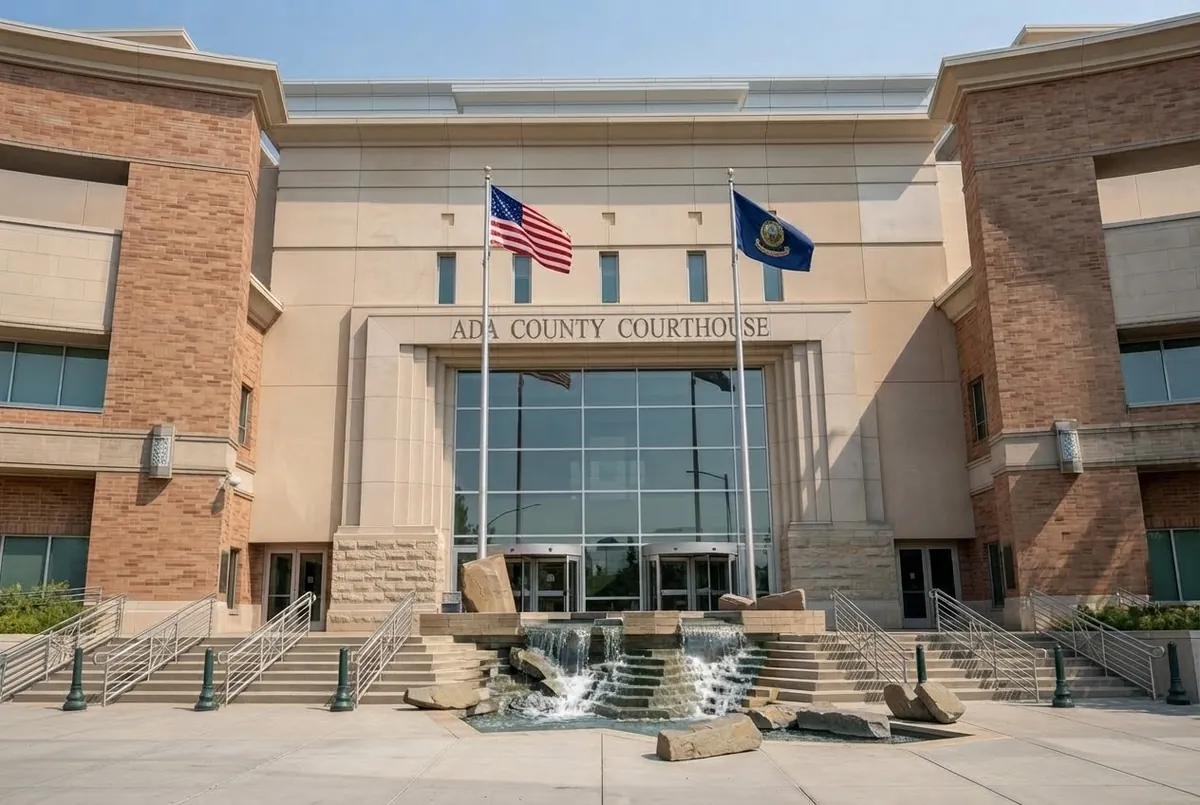
Alamance County Courthouse
Courts Serving Alamance County
| Court | Address | Phone |
|---|---|---|
| Alamance County Superior Court | 212 West Elm Street, Graham, NC 27253 | (336) 438-1000 |
| Alamance County District Court | 212 West Elm Street, Graham, NC 27253 | (336) 438-1000 |
| Alamance County Magistrate's Office | 109 South Maple Street, Graham, NC 27253 | (336) 570-6700 |
| U.S. Middle District of North Carolina (Federal) | 324 West Market Street, Greensboro, NC 27401 | (336) 332-6000 |
| U.S. Bankruptcy Court – Middle District of NC | 101 South Edgeworth Street, Greensboro, NC 27401 | (336) 358-4000 |
Municipal courts do not exist in North Carolina. All criminal, traffic, and civil matters are handled through the state court system regardless of which municipality is involved.
What Types of Cases Alamance County Courts Hear
Courts in Alamance County handle a broad range of case types across the Superior Court, District Court, and Magistrate divisions:
- Criminal: Felonies, misdemeanors, infractions
- Civil: General civil litigation, small claims, summary ejectment (evictions)
- Family Law: Divorce, custody, child support, domestic violence protective orders, paternity, termination of parental rights
- Probate and Estates: Decedent estates, guardianships, incompetency proceedings, trusts
- Juvenile: Delinquency, undisciplined youth, abuse/neglect/dependency
- Traffic: Moving violations, DWI charges, license revocations
- Adoption
The sections below break down which division handles each category.
District Court Cases in Alamance County
Alamance County District Court hears misdemeanor criminal cases, infractions, and traffic offenses including DWI. It also handles all family law matters — divorce, child custody, child support, domestic violence protective orders, and juvenile cases. Civil disputes valued at $25,000 or less are tried in District Court, along with summary ejectment actions. District Court judges preside over these cases without a jury, though jury trials are available for certain misdemeanor appeals. Cases typically arrive through criminal citations, civil complaints filed with the clerk, or petitions in family and juvenile matters. A chief district court judge oversees case management and judge assignments within the district.
Magistrate Court Cases in Alamance County
Magistrates in Alamance County operate under the District Court Division and handle several front-line judicial functions:
- Issuing arrest warrants, criminal summonses, and search warrants
- Conducting initial appearances and setting bail conditions
- Hearing small claims cases up to $10,000
- Deciding summary ejectment (eviction) actions
- Performing marriages
- Accepting guilty pleas for certain minor traffic infractions
Under North Carolina law (G.S. Chapter 7A, Article 19), magistrates have jurisdiction over small claims up to $10,000. Cases heard by a magistrate can be appealed to District Court for a new trial. The magistrate's office in Alamance County is typically available around the clock for warrant and bail matters.
Family Law, Probate, and Juvenile Matters in Alamance County
Family Law: Divorce, equitable distribution, custody, visitation, child support, alimony, paternity, and domestic violence protective orders are all heard in Alamance County District Court. To file for divorce in North Carolina, at least one spouse must have resided in the state for six months, and the parties must have been separated for at least one year. Domestic violence protective order petitions can be filed with the clerk of court.
Probate and Estates: The Alamance County Clerk of Superior Court handles estate administration, probate of wills, guardianship proceedings, and incompetency hearings. The estates division within the clerk's office manages filings, inventories, and accountings.
Juvenile: Juvenile cases — including delinquency, undisciplined conduct, and abuse/neglect/dependency — are heard in District Court. Juvenile court records are confidential under North Carolina law and are not available to the general public. Juvenile court counselors through the NC Department of Public Safety screen and process delinquency complaints before they reach a judge.
How Cases Move Through the Alamance County Court System
- Filing / Initiation: Criminal cases begin with an arrest, citation, or grand jury indictment. Civil cases start with a complaint filed with the clerk. Family and juvenile matters are initiated by petition.
- Assignment: The chief district court judge or senior resident superior court judge assigns cases to individual judges based on case type and calendar availability.
- Initial Hearing: Criminal defendants appear for a first appearance or arraignment. Civil cases receive a scheduling order or are placed on the trial calendar.
- Pre-Trial Phase: Discovery, motions, mediation (required in many custody and civil cases), and plea negotiations occur during this stage.
- Trial or Resolution: Cases are resolved by plea agreement, bench trial, jury trial, settlement, consent order, or default judgment.
- Post-Judgment: Criminal cases proceed to sentencing. Civil judgments may be enforced or appealed. Appeals from District Court go to Superior Court; appeals from Superior Court go to the North Carolina Court of Appeals.
Court Administration, Local Rules, and Public Access in Alamance County
The Senior Resident Superior Court Judge and the Chief District Court Judge oversee court operations in Alamance County. A Trial Court Coordinator manages calendaring, scheduling, and administrative functions for the judicial district.
Local Rules: Local rules and procedures for Judicial District 15A are published through the North Carolina Judicial Branch local rules page. These rules cover motion practice, calendar procedures, and case management expectations.
Public Access: Most court records in North Carolina are public under G.S. § 132-1 (Public Records Act). However, certain records are restricted or sealed — including juvenile files, adoptions, mental health proceedings, and records sealed by court order. The clerk's office can confirm whether a specific record is available for public inspection.
Attending Hearings: Most courtroom proceedings in Alamance County are open to the public. Some hearings may be conducted by remote audio or video at the court's discretion. Contact the Trial Court Coordinator's office at the courthouse for current hearing schedules and remote access options.
Court Records and Related Court Resources in Alamance County
- Court Record Search: Use AlamanceCourt.us to look up publicly available court record information for Alamance County. The eCourts Portal from the NC Judicial Branch also provides online case search capabilities through the NC eCourts system.
- Court Calendars: Hearing schedules for Alamance County courts are posted through the NC Courts calendar lookup tool.
- Court Forms and Self-Help: The NC Judicial Branch forms page provides standardized forms for civil, criminal, family, estate, and small claims cases. A self-service center may be available at the courthouse for help completing forms.
- Clerk of Superior Court: For certified copies, estate filings, or in-person record requests, visit the Alamance County Clerk of Superior Court at 212 West Elm Street, Graham, NC 27253, or call (336) 438-1000.
- NC Department of Adult Correction – Offender Search: Search for inmates in state custody through the NC Department of Adult Correction offender lookup tool.
- NC Sex Offender Registry: Search the North Carolina Sex Offender Registry maintained by the NC State Bureau of Investigation.
- Criminal History Records: Statewide criminal background checks can be requested through the NC State Bureau of Investigation.
- Vital Records: Birth, death, marriage, and divorce certificates are available through the NC Vital Records office or the Alamance County Register of Deeds for marriage licenses issued locally.